


|
Getting your Trinity Audio player ready...
|
The housing crisis requires solutions. More housing, more available land, less bureaucracy, legal certainty, and policies that make construction and renovation possible. But what Brussels has now put on the table could take us in exactly the opposite direction: towards a situation in which the authorities decide who can buy a home, where they can buy it, and for what purpose.
The draft of the so-called Affordable Housing Act does not impose a general ban on purchases. However, it would allow authorities, in areas declared to be under housing pressure, to restrict the acquisition or use of second homes and land not intended for permanent residence. On paper, these measures would be subject to requirements of proportionality, justification, and review. In practice, in Spain, they could become the perfect pretext for expanding government intervention.
And that is the real risk.
Spain’s Housing Minister has already welcomed the alleged influence of Spanish policy on the European proposal. It is difficult not to interpret this enthusiasm as a sign of intent: if Europe establishes a framework, the Spanish Government could present it as a European mandate—although it is not one—to introduce further restrictions on property ownership and home purchases.
This is not only about tourist apartments. That debate deserves serious, differentiated, and data-based regulation. We are talking about something much deeper: the precedent that public authorities could decide that a home you want to buy should not belong to you because its intended use does not fit the purpose that the Administration considers a priority.
Today, the starting point is a second home in a “pressured” area. Tomorrow, what would prevent the concept from being expanded? Who decides which municipality is under pressure, for how long, and according to which criteria? Who guarantees that a restriction initially presented as exceptional will not become permanent policy? Once the idea that buying a home requires political approval becomes normal, private property ceases to be a solid right and becomes a revocable concession.
The damage to the real-estate sector would be immediate. Investment comes to a halt when rules change with every election, every local government, or every administrative designation. Developers, homeowners, savers, small investors, and buyers all need certainty. Without it, there are fewer transactions, less financing, less renovation, and, above all, less supply.
And less supply means higher prices. Precisely the opposite of what these measures claim to pursue.
Housing does not become more affordable by banning some people from buying, restricting uses, or penalising those who invest. It becomes more affordable by building more homes. By making land available, streamlining permits, removing obstacles, cooperating with the private sector, and providing stability for those who put homes on the market.
Legally restricting the purchase of housing may sound popular in a headline. But it does not create a single new home. It does not, by itself, reduce construction costs. It does not unlock land. It does not speed up permits. It does not solve the structural shortage of supply.
What it does do is send a devastating message: in Spain, your right to buy and enjoy your property may depend on the changing will of a government or a local authority.
If Brussels approves this approach and the Spanish Government uses it as a legal umbrella to restrict home purchases, it would be a severe blow to confidence in the real-estate market. And when that confidence is destroyed, it is not only the sector that suffers: families, savers, and everyone who still aspires to own a home will suffer too.
Because housing is not protected by weakening private property. It is protected by making it possible to provide more homes for everyone.
Based on information published by idealista/news and The Objective. The proposal described remains under consideration and does not establish a general ban on property purchases.
About The Author

Related Posts

Housing by decree: an urgency that comes too late and moves too fast
The Government is once again presenting housing as a national priority. This…

New Housing Plan 2026–2030: increased support for rent, a boost for renovation and a strengthening of social housing
New Housing Plan 2026-2030: Increased Rental Support, Renovation Incentives, and Stronger Public…
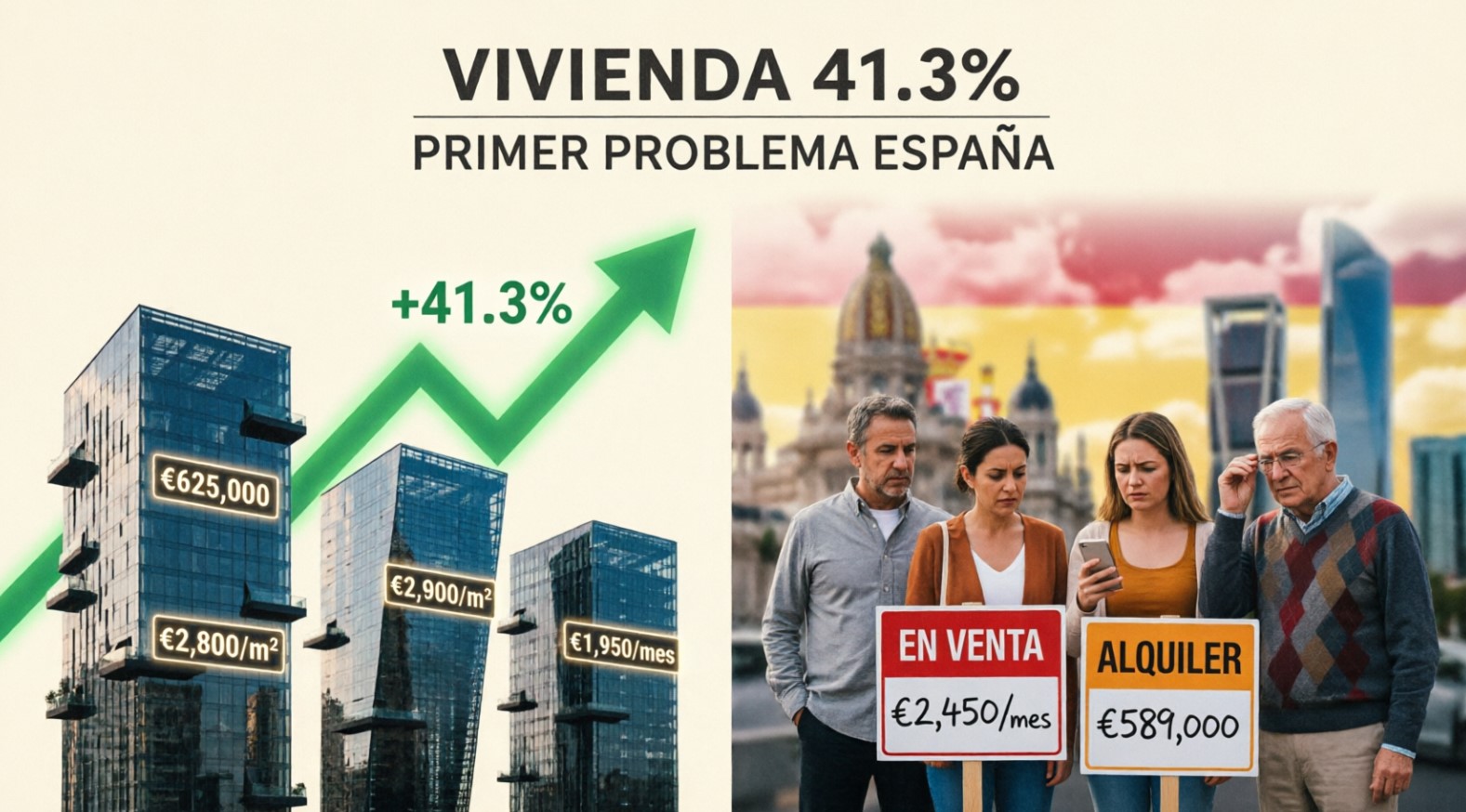
Housing remains the top concern for Spaniards in April 2026
41.3% of citizens cite it as the country's main problem, although it…
